The short answer
A fade usually removes more hair across the sides and back, creating a visible gradient that may blend all the way down to skin. A taper keeps more fullness and limits the shortest transition to areas such as the temples, sideburns and neckline.
If you want stronger contrast, a fade may be the better direction. If you want a cleaner outline while preserving more of the original shape, consider a taper.
Skin is a separate choice: a fade does not have to reach bare skin, and a taper can blend to skin at the edges. Ask about coverage, transition height and shortest length rather than relying on the name alone.
| Feature | Fade | Taper |
|---|---|---|
| Coverage | Broader sides and back | Focused on temples and neckline |
| Contrast | Subtle to dramatic | Often softer; preserves fullness |
| Shortest length | Hair remaining or down to skin | Hair remaining or skin at the edges |
| Grow-out | Close blends show growth sooner | A softer perimeter may grow out less noticeably |
What is a fade?
A fade gradually changes the hair from very short to longer as it moves up the head. A low fade keeps the transition near the ear, a mid fade moves it toward the center of the sides and a high fade places the contrast closer to the top.
A skin fade is taken down to bare skin at its shortest point. That creates a crisp, high-contrast finish, but it also means the growth becomes visible quickly. If you like the fade to look freshly cut all the time, plan on more frequent appointments.
“Low” describes the height; “skin” describes the shortest point. You can ask for a low skin fade or a low fade that leaves a little hair. Point to both details in a photo.
What is a taper?
A taper applies the transition more selectively. The barber shortens the hair around the sideburns and neckline while leaving more weight through the main sides and back. The result can still look precise, but it changes less of the overall silhouette.
Tapers pair well with curls, waves, twists, textured tops and classic shapes. They can also be useful if your workplace or personal style calls for a cleaner but less exposed finish.
Taper vs. taper fade
People often use these terms interchangeably, but they can describe different amounts of coverage. A traditional taper keeps the shortest work focused around the edges. A taper fade can create a more visible gradient around the temples and neckline while still preserving more fullness than a full fade.
Terminology varies between barbers and reference photos. Confirm whether you mean the temples, neckline or a blend across the whole side. The photo and placement matter more than winning a debate over the label.
Taper or fade for curly hair?
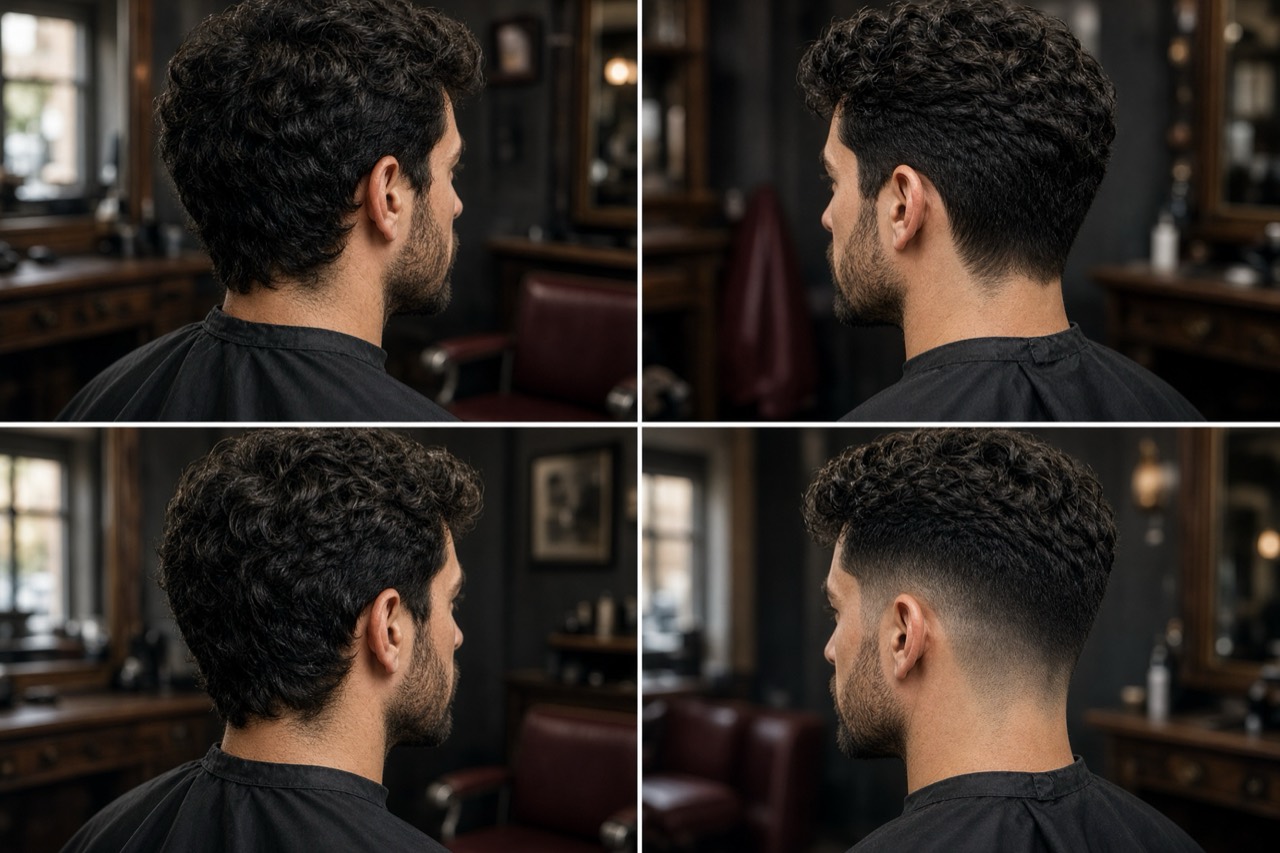
Both can work with a curly top. A taper keeps more fullness around the head; a fade makes the contrast with the top more visible. Discuss how much curl length and side weight you want to keep, and how the shape should look when you style it at home.
Compare the photos above for coverage, then use your own texture and density as the starting point. A reference is a direction, not a guarantee that the same silhouette will sit identically on different hair.
How to decide
Think about three things: contrast, maintenance and the shape you want to keep. Choose a fade when you want the sides to play a major role in the style. Choose a taper when you mainly want the perimeter cleaned while protecting fullness.
A close finish can need attention sooner than a softer transition. Our haircut maintenance guide explains the starting ranges and what to watch as the cut grows.
You do not have to make the decision alone. Show your barber a reference and point out what you like—the transition height, the shortest area or the amount of weight left behind. See our fade and taper service in Lawrenceville or discuss the overall shape with our precision haircut service.
What to say in the chair
For a taper: “Clean the temples and neckline, keep the sides fuller, and keep this much length on top.”
For a fade: “Keep the transition low, take the shortest part down to skin, and leave enough length on top to wear it this way.” Change the height and shortest length to match your preference.
Use our five-point haircut checklist to cover the hairline and styling routine too. At Str8 Razor on Sugarloaf Parkway, you can discuss those details with Shawn or Terrell before the cut begins.